
| Carl Alexander Clerck (1709 - 1765) and Engraver Carl Bergqvist (1711 - 1781) and Printer Lars Salvius (1706 - 1773) | (donherbisonevans@yahoo.com) and Stella Crossley |
|
| Carl Alexander Clerck (1709 - 1765) and Engraver Carl Bergqvist (1711 - 1781) and Printer Lars Salvius (1706 - 1773) | (donherbisonevans@yahoo.com) and Stella Crossley |
Clerck began collecting and classifying Spiders, and in 1757 wrote
naming each species using the new binomial naming system later popularised by Linnaeus,
In 1759 he started the publication of his major work
This was a series of detailed but uncommented line drawings illustrating and naming numerous species of Lepidoptera that were in his, and his friends,' collections.
Clerck's drawings were engraved on copper plates by Carl Bergqvist.
Operating primarily in Stockholm, Bergqvist became one of the most reliable and sought-after illustrators for Sweden's scientific community during the Enlightenment, transferring intricate hand-drawn sketches onto metal plates for mass printing.
In the 1700s, copper engraving was a grueling and precise trade. Artists like Clerck would sketch a specimen from life, and Bergqvist would use a steel burin to mirror and carve those lines into a copper sheet.
His ability to capture texture, whether the soft fuzz of a moth’s body, the delicate veins of an insect wing, or the jagged terrain of a Swedish mountain map, made him a foundational visual architect of early taxonomy
Bergqvist was the engraver behind the essential fold-out maps and natural history plates for Linnaeus's famous domestic expeditions. Most notably, he engraved the five large fold-out plates for Linnaeus’s Wästgöta-resa (1747), which documented the geology, plants, and culture of West Sweden
Bergqvist's engravings of Clerck's drawings were printed free of charge in Stockholm by Lars Salvius.
Lars Salvius (1706–1773) was a highly influential 18th-century Swedish book printer,
publisher, and journalist.
He is widely regarded as the central figure who modernized and transformed
the Swedish book market during the Age of Liberty and the Enlightenment.
Operating from Stockholm, Salvius built a massive print network that broke up
archaic book-binding monopolies and connected Swedish science to the rest of mainstream Europe.
Clerck also employed a number of colorists to paint the drawings in water colours, including
Because of Clerck's death in 1766, 'Icones Insectorum Rariorum' was never finished.
Copies of illustrations in this website drawn by Carl Clerck,
engraved by Carl Bergqvist, and printed by Lars Salvius :-
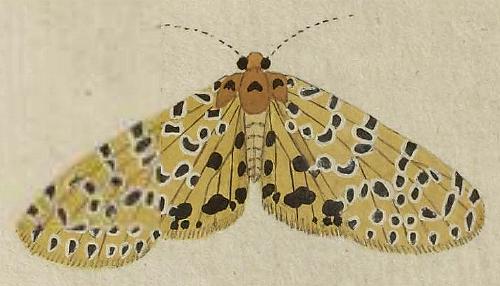 Argina astrea |  Eudocima fullonia | 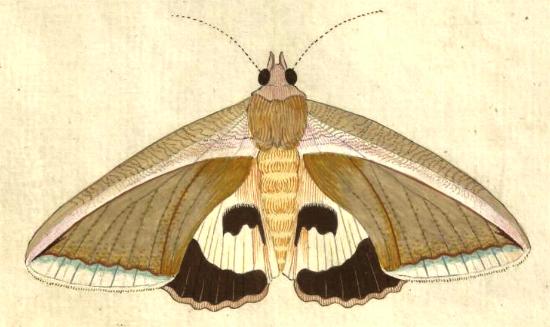 (Eudocima salaminia) |  Agonopterix alstroemeriana |
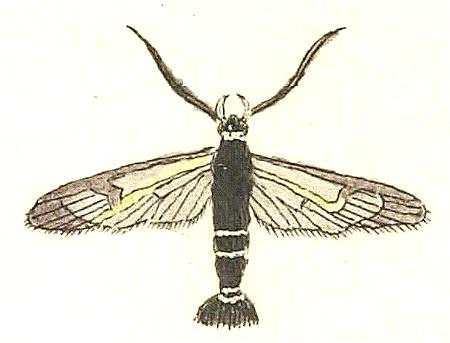 Synanthedon tipuliformis | 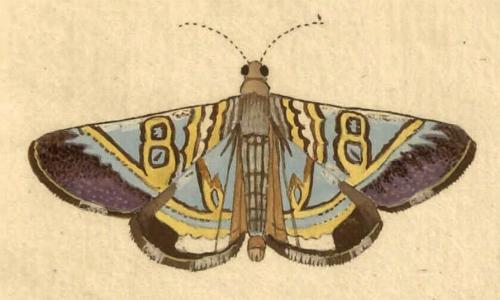 Glyphodes margaritaria |
 in progress |
 butterflies |  Lepidoptera |  artists |  moths |
(written 25 October 2026)